Intro
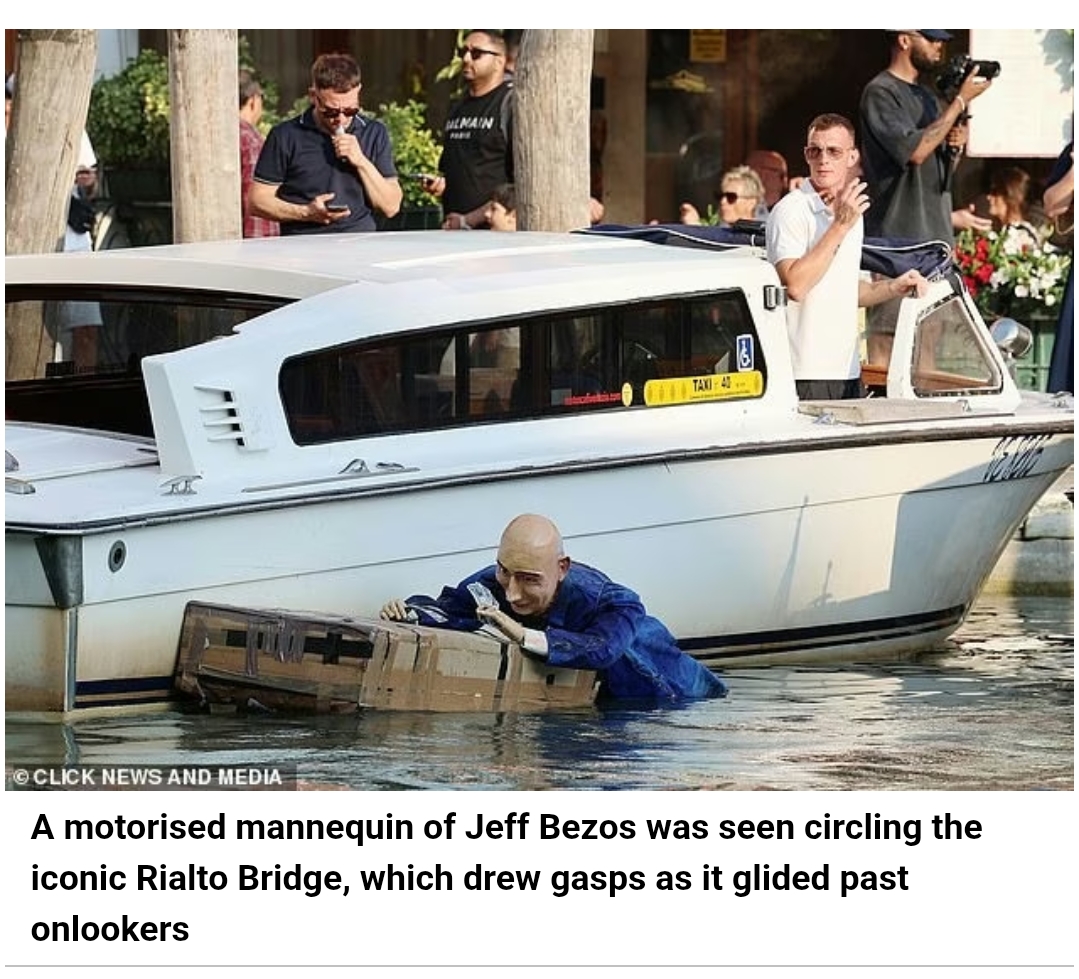
Jeff Bezos and Lauren Sánchez’s wedding ceremony in Venice was a three-day extravaganza costing upwards of $50 million. It was attended by roughly 200 high-profile guests and has been framed by the media as a spectacle, with nearly 90 private jets, tight security, and celebrity appearances. Venice residents responded with banners on landmarks, Bezos dummies in the canals, and creative protests against the intrusion of extreme wealth into their communities.
Simultaneously, elite commentators and influencers piled onto the outrage. Megyn Kelly mockingly described Bezos as “a walking penis,” while questioning the event’s taste and social ethics. Others condemned the excesses of the wedding from afar, projecting moral authority while themselves occupying upper-echelon income brackets.
There’s a critical differentiation to be made here: Venice’s residents are angry because their communal spaces being blocked off by rich tourists. Compare that with bourgeois theatricality from wealthy media figures, whose objections function more as performative distancing. They say, “I’m better than that,” to ingratiate themselves to their audiences without risking their own access to privilege.
The Bezos wedding was performance art
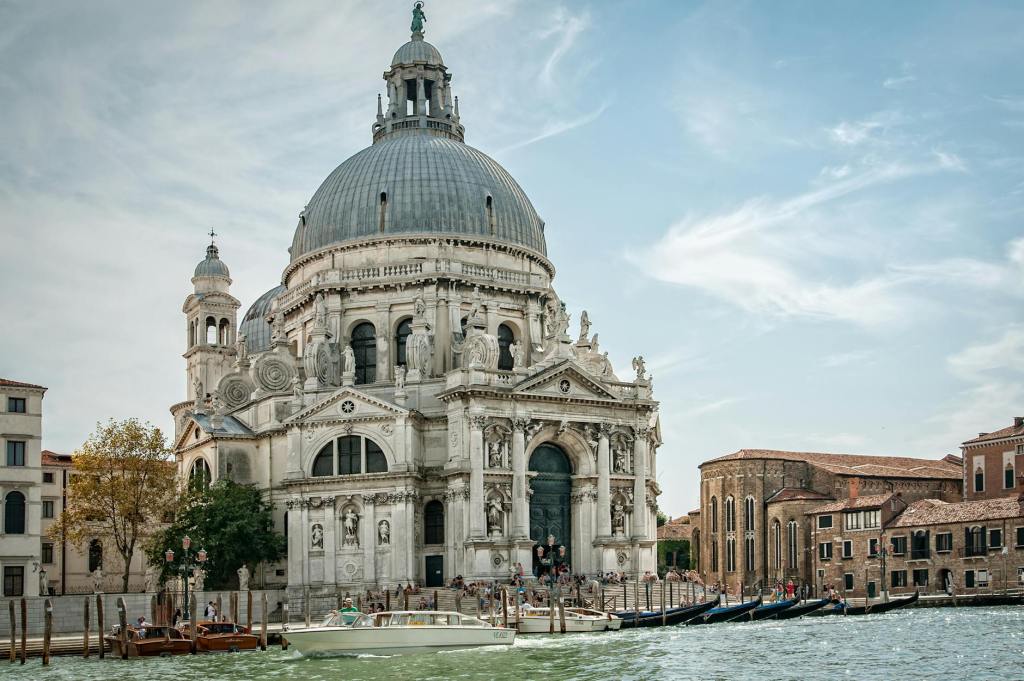
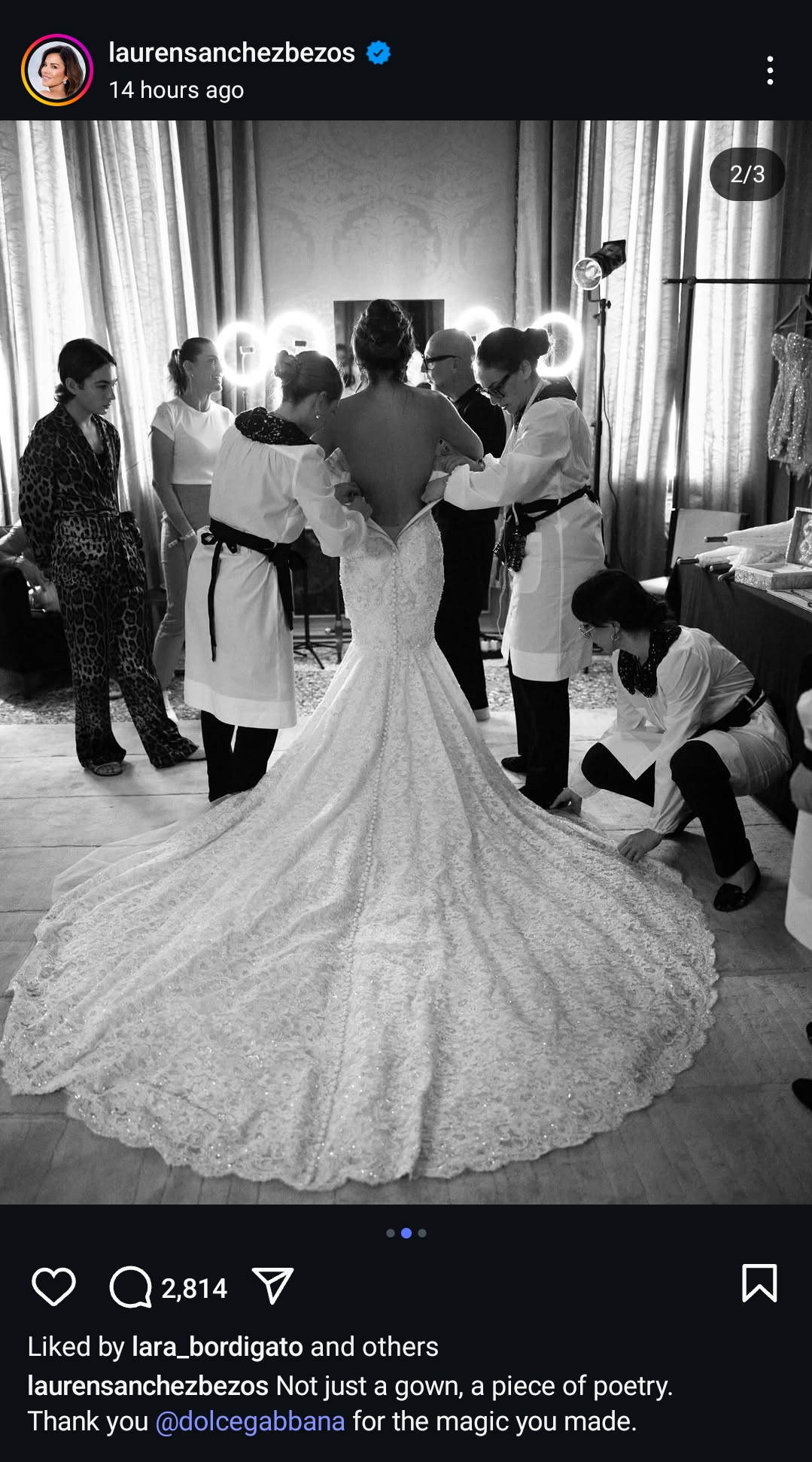
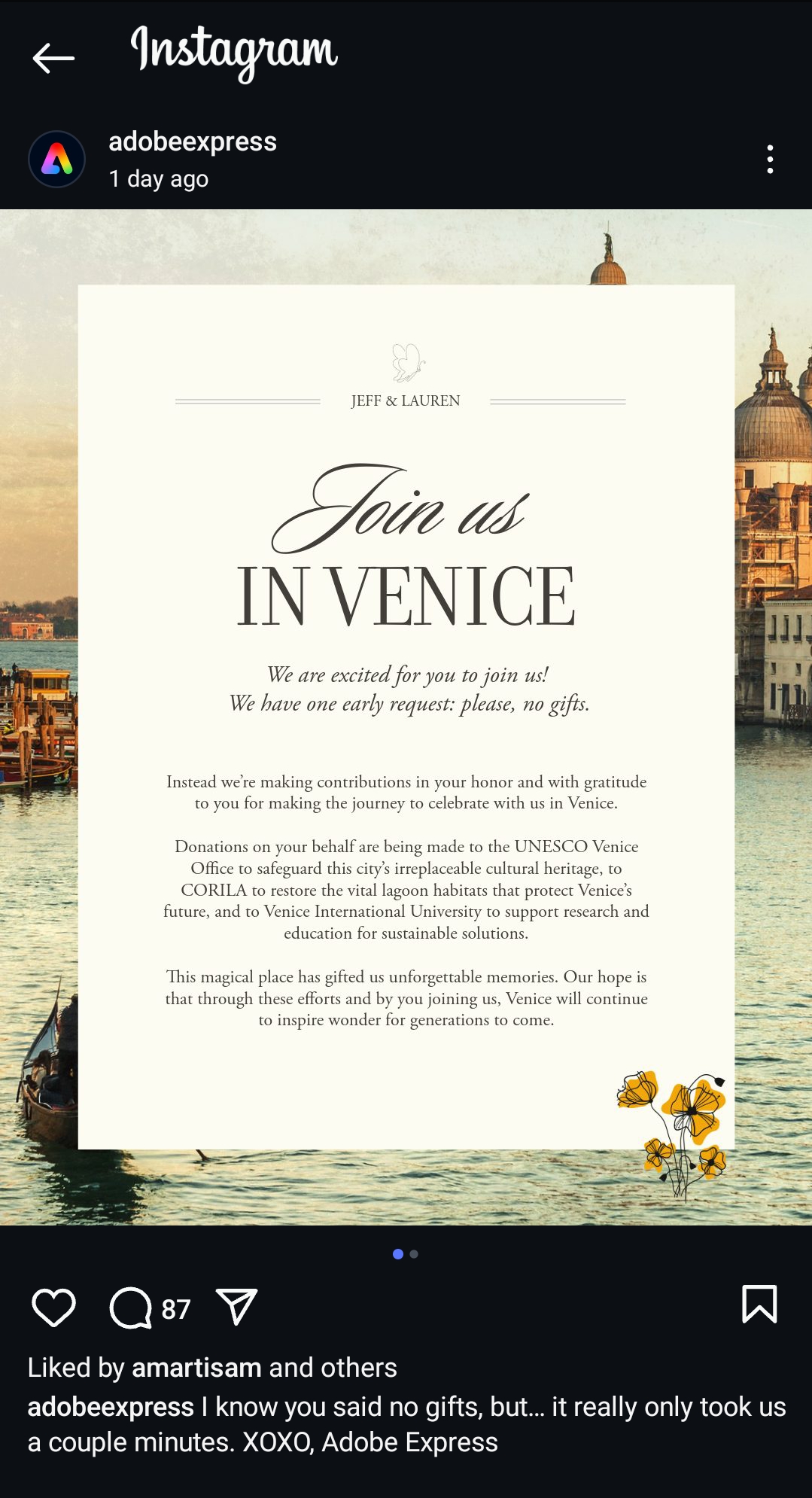
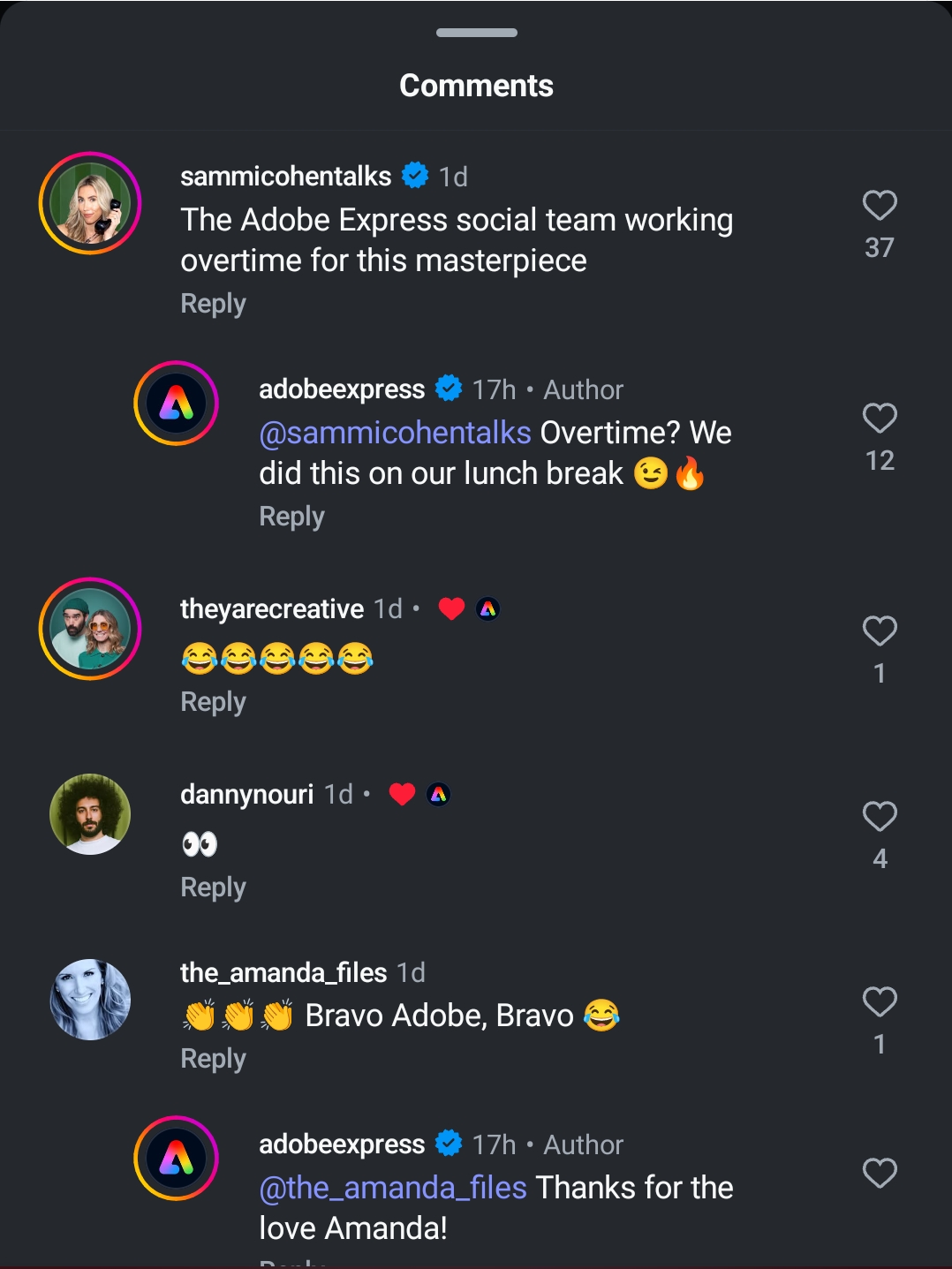
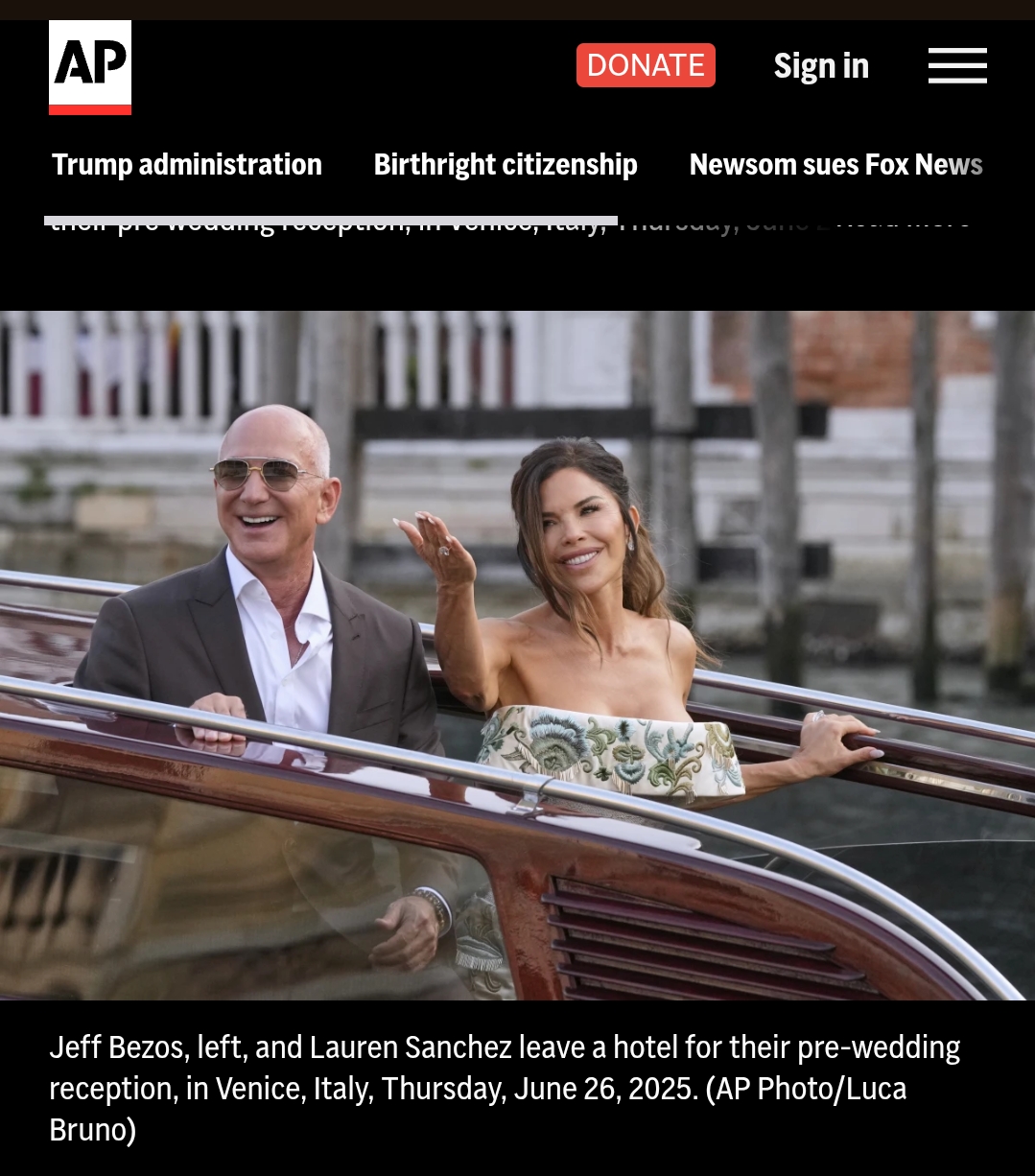
On June 27, 2025, the wedding celebration of Jeff Bezos and Lauren Sánchez felt more like a carnival (or circus from the looks of the outfis). Over the course of three days, Venice was transformed into a semi-private camping ground for the couple and their celebrity guests. News agencies like AP News photographed Bill Gates, Leonardo DiCaprio, Kim Kardashian, and Oprah Winfrey emerging from their hotels. CNN poured scorn on the ‘tacky’ wedding invitation and even Adobe took a swipe at it on Instagram.
Venetians responded with protests under the banner “No Space for Bezos.” They staged boat parades, flew protest banners, and set up satirical effigies of Bezos holding money bags and wearing a crown. This was a political protest. Residents were resisting a city increasingly sold off to tourists, investors, and celebrities. They resented their homes being reduced to photo ops and event backdrops.
These protests highlighted their experiences of displacement and over-tourism. But as the protests spread through social media, their message was quickly co-opted by affluent commentators with no material stake in the matter.
Millionaires policing billionaires
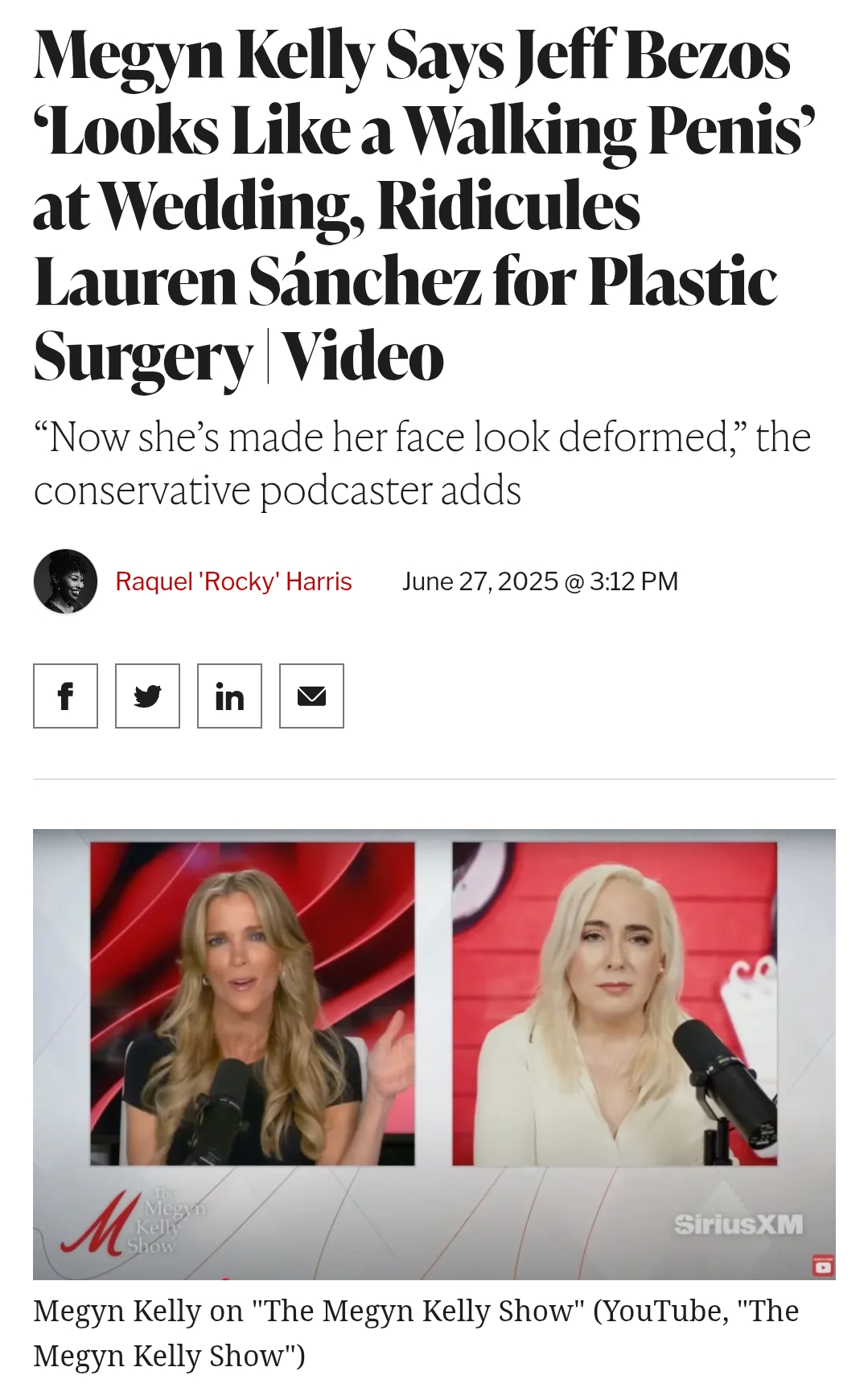
And as the protests unfolded, a different kind of spectacle emerged online: one of elite outrage. Megyn Kelly, a media figure who was fired from NBC in 2018 but kept all $69 million from her contract, denounced the wedding on her SiriusXM podcast. She called Bezos “a walking penis” and said the event was a kind of public shame ritual for Lauren Sánchez. While I found her critique quite funny, I didn’t think it was about inequality or justice. It was about what she found distasteful, embarrassing, or socially incoherent.
Across media platforms, commentators are using anti-billionaire rhetoric to polish their public image. Some happily accept invitations to social events attended by these billionaires. And they are also happy to collect six- and seven-figure annual incomes as they report on them. So it’s a bit rich for them to be denouncing the ultra-rich. What stings is that the critique is coming from a position of material security most of their followers will never attain.

In other words, their issues are not structural. What they offer are opinions about how wealth is performed, while ignoring how it’s distributed. It’s not that billionaires exist, they say, it’s that some don’t manage their status with sufficient grace, subtlety, or political awareness.
Sociologist Thorstein Veblen called this “invidious distinction”: using taste and moral judgment to climb within your own class. That’s exactly what’s happening here. Outrage becomes a weapon of intra-elite competition, not a tool for justice.
Anti-billionaire discourse
What once passed for class critique is now a visual language of influence. Anti-billionaire content is the new thing that can be branded, styled, and monetised. On YouTube, one creator rails against Taylor Swift’s excessive wealth while promoting the singer’s albums in the video. What looks like a revolution is merely viral content strategy.
Critique has been optimised to please the algorithm. Content creators have an easy way to manage their reputation and signal virtue without giving up their privilege. Loudly denouncing billionaires is something that millionaires do to feel safe. They really are scared that their audiences will dislike them for wanting even more access and wealth. Being a contrarian is also chic, and chic is always cool.
It’s still an exclusive club
In this closed loop of elite outrage, it’s important to ask: Who is not invited to speak?
The people who are most impacted by extreme wealth are ignored. These individuals include marginalised workers, displaced communities, underrepresented creatives. They are rarely given space within elite media conversations. Their critiques are too raw, too direct, too threatening. When they speak, they’re labeled as bitter, angry, or disruptive. Meanwhile, multimillionaires and media personalities with a lot of influence are allowed to perform outrage without pushback.

Thus we have a racialised and class-bound filter on public discourse. We can also say that the moral posturing of the elite is exclusionary by design. In other words, it flattens inequality into a taste war among the powerful while keeping those outside the gate firmly in place. What we’re witnessing is self-preservation and not solidarity.
Outro: Be honest
If we are to take inequality seriously, we must also take seriously who is allowed to critique it, and why. The spectacle of Jeff Bezos’s wedding is not just about opulence; it’s about how wealth performs itself, and how that performance triggers a ritual of elite outrage disguised as justice. That is to say, when multi-millionaires get mad at billionaires, they don’t really care about us.
Real critique requires risk. It would ask for redistribution while pointing out access, structure, and harm. Unfortunately, anti-billionaire discourse is another tool for brand-building, reputation laundering, and social media content, not an engine for structural change.
To move forward, we must make room for voices that are not already protected by wealth or access to power. We must stop mistaking performance for change. And we must decide clearly whether we are here to reshape the system, or simply re-style it in a different image.
 Saint Joan
One response to “Performative Outrage in the Media (Jeff Bezos got married)”