
Origins of Lilith: From Sumerian Myth to Jewish Folklore
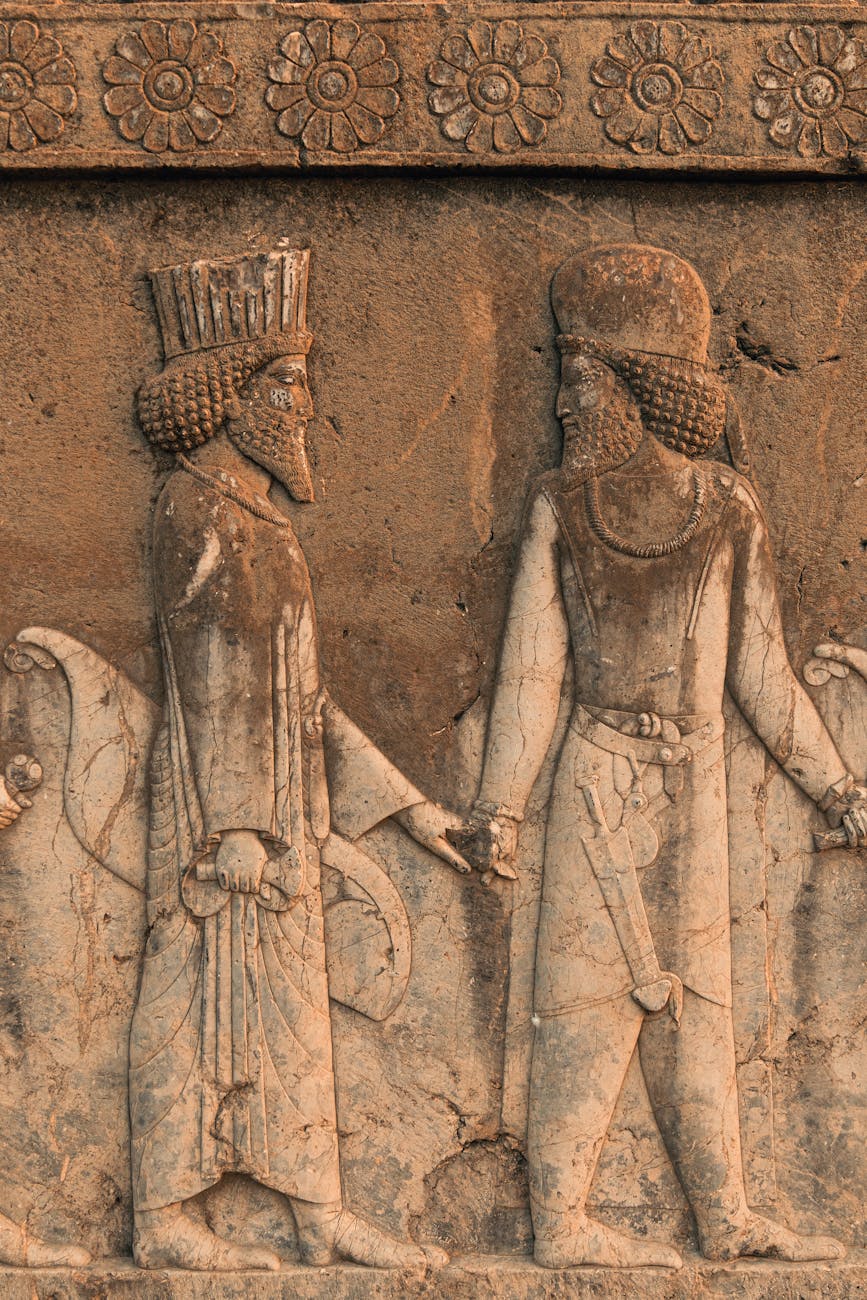
Lilith’s earliest known appearances are in Mesopotamian mythology, where she is associated with the Lilu, a class of wind or night demons. In Sumerian texts, she is linked to the Lilītu, female spirits thought to haunt desolate places and harm infants. The Akkadian Lamashtu, a child-snatching demon, also shares similarities with later portrayals of Lilith.
Today, Lilith is often depicted as a dark, dangerous, or demonic character. Her legacy as a scapegoat reveals society’s attitudes towards female autonomy, sexuality, and the refusal to submit to patriarchal norms.
Her most prominent role, however, is found in Jewish folklore. In the Alphabet of Ben Sira (circa 8th-10th century CE), Lilith is described as Adam’s first wife, created from the same earth as him. Unlike Eve, who was formed from Adam’s rib, Lilith was made equal to Adam. However, she refused to submit to Adam and fled from Eden. In response, God created Eve as a more compliant partner for Adam.

The Scapegoating of Lilith: A Symbol of Fear and Control
Lilith’s story fits the scapegoat archetype well. Her refusal to accept subjugation led to her literal demonisation. Later traditions cast her as a succubus or a baby-stealing witch. Her vilification served to reinforce the idea that female independence and sexual agency were dangerous and needed to be suppressed. By projecting fear onto Lilith, patriarchal societies were able to maintain social order by controlling women’s roles and behaviours. As a supernatural being, Lilith became associated with child mortality and seduction. Thus blame was shifted away from natural causes and individual choice.
The Evolution of Lilith in Literature and Pop Culture
Over centuries, Lilith’s image has been reinterpreted by popular culture. In fantasy and horror genres, she appears as a powerful and malevolent character. We see her in the Anita Blake: Vampire Hunter series by Laurell K. Hamilton, and as the Lilith character in True Blood. Her name is frequently invoked when depicting dark, seductive, and dangerous female characters.
In vampire mythology, Lilith is usually depicted as the mother of all vampires. This aligns with her ancient portrayal as a mother of demons (Lilitu), and a source of evil and corruption. The horror genre, which often plays on societal fears, uses Lilith as a symbol of the archetypal femme fatale to weaponise her independence.
Why People Have a Knee-Jerk Reaction to Lilith
The negative reactions to Lilith often stem from deeply ingrained religious and cultural narratives. In religious texts, such as the Talmud and later mystic traditions like the Zohar, Lilith is described as a seducer of men and a danger to children. These fears manifested in practical ways, with amulets and incantations used to ward off her supposed influence, particularly in protecting newborns.
In ancient times, the concept of Lilith as a child-stealing demon contributed to her notoriety. In a time when infant mortality was high, attributing these tragedies to a supernatural being provided a sense of explanation and control.
Additionally, the name Lilith has often been associated with the occult, witchcraft, and satanic practices in popular culture. Shows like Supernatural and Chilling Adventures of Sabrina perpetuate this dark image, and reinforce the idea that Lilith is to be feared. This portrayal, while engaging for audiences, obscures her original story as a symbol of independence and resistance.
Lilith and Her Legacy
Lilith’s portrayal as an evil entity unmasks the illusion that society is built to protect women, children, and the vulnerable. Instead, she reveals a darker truth: they are often treated as resources to be consumed. Lilith is a mask that the patriarchy wears to conceal its own bloodlust, projecting its appetite for dominance and control onto the feminine.

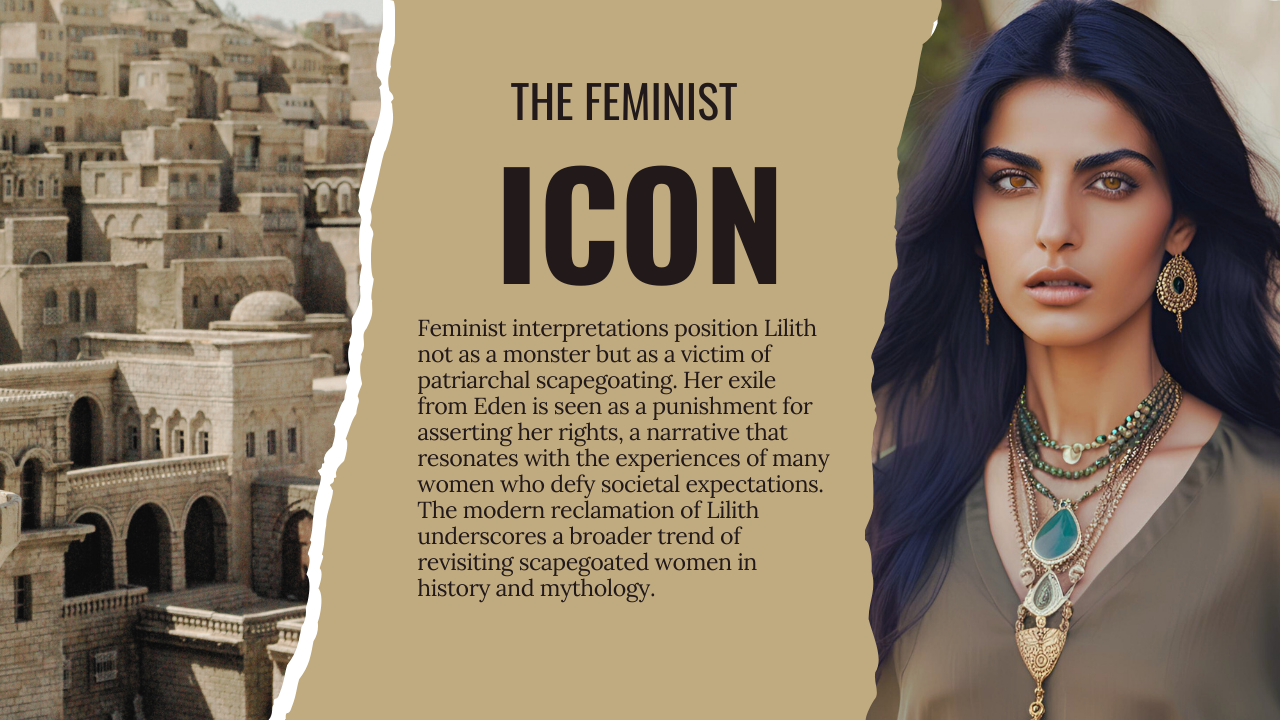
The myth of Lilith exposes how the raw power of the feminine is cast as a force that must be subdued even as masculine energy is free to unleash its own destructive potential. The danger of unchecked consumption and exploitation is thus deflected onto women through their inherent capacity for creation and life. By vilifying a woman’s desires, society suppresses her free expression, independent thought, and autonomy—all of which threaten patriarchal power structures. When a woman embraces her desires and autonomy, it challenges the status quo, forcing men to either share power or lose unfettered access to women as a resource.
What is perhaps most insidious is how women themselves are often co-opted into maintaining this dynamic. They are conditioned to police their own behaviour and that of their daughters and other women in their communities. In some religious and cultural traditions, a girl’s natural evolution into adolescence and her curiosity about her own potential as a fully realised woman are treated as dangerous—bordering on the criminal or pathological.
This leads to the pervasive notion that women who openly and boldly express their femininity are a threat, part of a deviant or ill-intentioned element of society that must be suppressed at all costs. Those who dare to assert their independence often face a progression of social punishments: guilt, shame, smear campaigns, bullying, and ultimately, ostracism. Lilith, in this sense, is not just a myth but a mirror reflecting the deep fears and insecurities of a society unwilling to confront its own shadows.
The duality of Lilith’s image, as both a monster and a martyr, invites us to question how societies construct narratives around women who refuse to be submissive. It also challenges us to reconsider the stories we tell about power and rebellion, and who we choose to blame when social norms are threatened.
 Saint Joan
You must be logged in to post a comment.